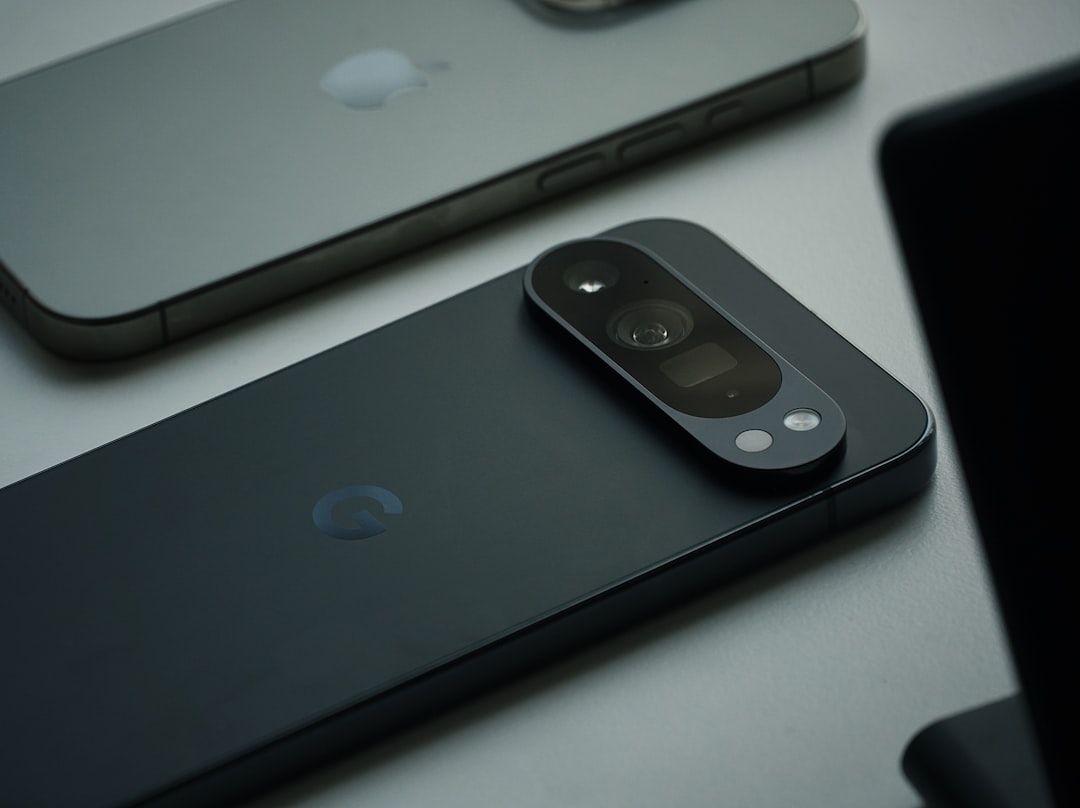
Honor wants you to forget about the iPhone 18 Pro. Bold claim, considering Apple's next flagship will likely dominate headlines when it launches later this year with its rumored ₹1,30,000+ price tag in India.
But Honor's Robot Phone — yes, that's actually what they're calling it — might just be weird enough to work. The Chinese brand has been teasing this device since last fall, promising "a whole new species of smartphone." Now leaks suggest it's targeting a direct collision course with Apple's premium launch window, with expected Indian pricing around ₹80,000-₹1,20,000.
the timing couldn't be more aggressive. While Apple focuses on incremental AI improvements, Honor is betting everything on a fundamentally different approach to smartphone intelligence.
What Makes a Phone "Robot"? The Technical Deep Dive
The Robot Phone centers around a physical gimbal system built into the camera module. Think DJI Pocket 2 camera, but integrated into your smartphone's rear cameras.
This isn't just software stabilization. The entire camera assembly can physically move and rotate, powered by what Honor calls "AI-driven motion intelligence." Videos show the phone literally following subjects around a room, adjusting angles autonomously based on scene analysis.
Here's where it gets technically fascinating: Honor has developed a three-axis mechanical gimbal system that's only 8mm thick. Traditional smartphone OIS (Optical Image Stabilization) moves lens elements by fractions of millimeters. Honor's system can physically rotate the entire camera module up to 45 degrees in any direction.
The AI processing happens through a dedicated NPU (Neural Processing Unit) that analyzes 30 frames per second for subject detection, movement prediction, and optimal framing. It's essentially giving smartphones the kind of intelligent camera operation we've only seen in professional cinematography equipment.
But the "robot" aspect goes deeper. Honor is integrating this with their MagicOS 8.5, creating an AI assistant that can physically interact with the world through camera movement. Imagine asking your phone to "find my keys" and watching it actively scan and track objects in your room.
India Market Reality Check: Pricing and Positioning
Let's talk numbers that matter for Indian buyers. Honor is reportedly targeting a global launch price of $1,200-$1,500, which typically translates to ₹80,000-₹1,20,000 in India after import duties and taxes.
That puts it squarely against the iPhone 18 Pro (expected ₹1,30,000+), Samsung Galaxy S25 Ultra (likely ₹1,25,000), and Google Pixel 9 Pro (around ₹90,000). But here's the crucial difference: while those flagships compete on familiar metrics like camera megapixels and display brightness, Honor is playing an entirely different game.
For India's massive creator economy — we're talking about 50+ million content creators across YouTube, Instagram, and regional platforms — this could be transformative. Current professional content creation requires smartphones plus separate gimbal equipment, often costing ₹15,000-₹30,000 additional investment.
Honor's Robot Phone eliminates that equation entirely. For wedding photographers in Delhi, food bloggers in Mumbai, or travel vloggers in Kerala, this represents a fundamental shift in mobile content creation possibilities.
Competition Analysis: How It Stacks Against Rivals
vs iPhone 18 Pro
Apple's rumored iPhone 18 Pro will likely focus on computational photography improvements and enhanced Siri integration. But Apple's approach remains software-centric — better algorithms, smarter scene detection, improved portrait mode.
Honor's advantage: Physical hardware differentiation that Apple simply can't match without redesigning their entire camera philosophy. Apple's weakness has always been hardware innovation constraints due to their minimalist design language.
Apple's counter-advantage: Ecosystem integration and long-term software support that Honor can't match.
vs Samsung Galaxy S25 Ultra
Samsung typically leads in display technology and S Pen functionality. The S25 Ultra will likely feature improved low-light photography and better zoom capabilities.
But Samsung's Galaxy AI features, while impressive, still operate within traditional smartphone paradigms. Their cameras don't physically move or track subjects autonomously.
For Indian market specifically, Samsung's stronger service network (1,800+ centers vs Honor's 500+) remains a significant practical advantage.
vs Google Pixel 9 Pro
Google's Pixel phones excel at computational photography and AI-powered features. Their Magic Eraser, Real Tone, and Night Sight represent current AI photography leadership.
However, Google's AI remains reactive — it processes what you capture. Honor's Robot Phone is proactive — it actively participates in capturing the content. That's a philosophical difference that could redefine smartphone photography.
Real-World Use Cases for Indian Buyers
Content Creators: Imagine a food blogger in Bangalore who can set up the Robot Phone, start recording, and have it automatically follow their hands as they prepare traditional Karnataka dishes. No manual camera adjustment, no expensive equipment.
Wedding Photography: Indian wedding photographers often work solo in challenging conditions. A phone that can autonomously track the bride's entrance or follow traditional rituals while the photographer focuses on other angles could be new.
Business Applications: For India's growing startup ecosystem, product demonstration videos become significantly easier. Tech entrepreneurs can showcase products while the phone intelligently frames and follows the presentation.
Education Sector: With India's massive online education market, teachers can create more engaging content where the phone automatically adjusts to show different teaching materials or follows classroom activities.
Travel Documentation: For India's domestic tourism surge, solo travelers can capture professional-quality videos of themselves at iconic locations without depending on strangers or carrying additional equipment.
My Personal Assessment: new or Gimmicky?
As someone who's been covering smartphone innovation for over a decade, I'll be honest: I'm cautiously optimistic about Honor's approach, but skeptical about execution.
The technical achievement is undeniable. Building a functional gimbal system into smartphone thickness constraints represents genuine engineering innovation. This isn't just another camera bump or AI marketing buzzword.
My concerns center around three areas:
Durability: Moving mechanical parts in smartphones historically create long-term reliability issues. India's diverse climate conditions — from Rajasthan's dust to Kerala's humidity — will test these mechanisms severely.
Software Maturity: new hardware means nothing without software that actually works reliably. Honor's MagicOS, while improved, still lacks the refinement of iOS or Samsung's One UI.
Market Education: Indian consumers need to understand why they need a "robot phone." Honor's marketing challenge isn't just competing with Apple — it's explaining an entirely new product category.
But here's what excites me: Honor is pushing smartphone evolution in a direction that could genuinely matter. While other manufacturers chase incremental camera improvements, Honor is reimagining what smartphone cameras can do.
For India's creator economy specifically, this timing feels right. We're seeing explosive growth in vernacular content, regional YouTube channels, and social commerce. Creators need better tools, and Honor's Robot Phone could provide exactly that.
The success will ultimately depend on execution quality and pricing strategy in India. If Honor can deliver reliable performance at ₹80,000-₹90,000 range, this could seriously disrupt premium smartphone assumptions.
FAQ Section
Q: When will Honor's Robot Phone launch in India?
A: Based on Honor's recent India market re-entry, expect a launch 2-3 months after global availability, likely in Q3 2024. Honor is rebuilding their India distribution network, so initial availability might be limited to major cities.
Q: How does the gimbal system affect battery life?
A: Honor claims the gimbal system consumes approximately 15% additional battery during active use. However, real-world testing will be crucial since mechanical movement requires more power than software-only features.
Q: Can the Robot Phone replace professional camera equipment for content creation?
A: For social media content and online videos, potentially yes. For professional photography or cinematography, it's better viewed as a powerful supplementary tool rather than complete replacement for dedicated equipment.
Q: What happens if the gimbal mechanism breaks? Is it repairable in India?
A: This is the critical question. Honor will need authorized service centers capable of handling complex mechanical repairs. Given Honor's limited current service network in India (around 500 centers), this could be a significant practical concern for buyers.